The web development industry is crowded with technically capable professionals. What separates high-earning developers from everyone else is not just code quality; it is positioning, visibility, and marketing strategy. In 2026, digital marketing for web developers is no longer optional. Whether you are a freelancer, agency owner, or full-time developer building a side business, your ability to market yourself directly impacts your client pipeline and pricing power.
At the same time, clients increasingly expect web developers to provide digital marketing recommendations after launch. A modern website without SEO, analytics, conversion optimization, or a lead generation strategy is incomplete.
This guide covers both sides of the equation: how web developers should market themselves, and what digital marketing recommendations to give clients after a website goes live.
Why Digital Marketing Matters for Web Developers
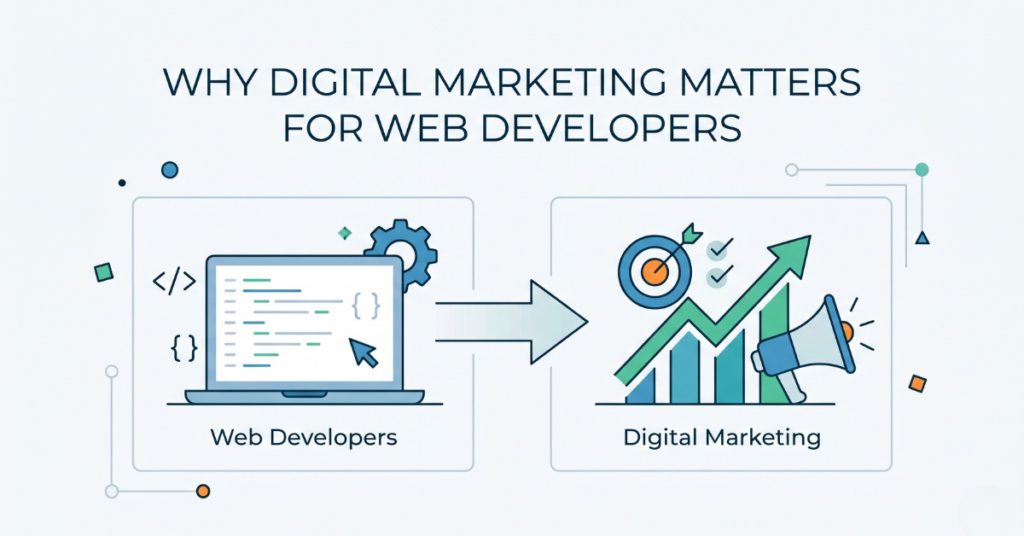
The biggest misconception in the industry is that “good work speaks for itself.” It rarely does. The developers winning premium projects are the ones building authority through portfolio SEO, LinkedIn visibility, content marketing, and niche positioning.
Strong digital marketing for web developers creates:
- Consistent inbound leads
- Better-quality clients
- Higher pricing leverage
- Recurring retainers
- Stronger referral systems
- Long-term brand authority
A strong web developer marketing strategy also helps you move away from low-cost freelance marketplaces and toward direct client acquisition.
Recommendation 1: Choose a Niche Instead of Being a Generalist
One of the most important digital marketing recommendations for web developers is niche positioning.
Saying you are a “full-stack developer” tells potential clients almost nothing. Instead, position yourself around a specific platform, industry, or business problem.
Examples include:
- Shopify Plus developer for ecommerce brands
- Webflow Enterprise specialist for SaaS companies
- WordPress VIP developer for publishers
- Headless CMS developer for enterprise brands
- CRO-focused landing page developer for local businesses
Niche positioning improves your SEO, referral potential, and LinkedIn authority. It also makes cold outreach far more effective.
Recommendation 2: Build a Portfolio With Case Studies, Not Screenshots
Most developer portfolios fail because they only display visuals. Clients care about outcomes.
Instead of uploading screenshots, create case studies using this framework:
- Problem
- Solution
- Result
- Metrics
For example:
- Reduced bounce rate by 32%
- Improved mobile speed from 42 to 91
- Increased conversion rate by 18%
- Boosted organic traffic after technical SEO fixes
Portfolio SEO is also critical. Use keywords tied to your specialization, such as:
- ecommerce web developer
- Webflow developer for startups
- Shopify Plus developer
- local business website developer
Platforms like GitHub, Behance, Dribbble, and CodePen can help distribute your work and increase visibility.
Recommendation 3: Use LinkedIn as Your Primary Lead Channel
For most professionals, LinkedIn is the strongest platform for digital marketing for web developers.
Your profile should clearly communicate:
- Your niche
- The industries you serve
- The business outcomes you create
- Proof of results
Instead of posting random coding snippets, publish content that helps potential clients understand business value.
Examples:
- Website redesign case studies
- SEO performance improvements
- Conversion optimization wins
- Website speed breakdowns
- Before-and-after audits
This type of content builds trust and authority much faster than generic developer posts.
Recommendation 4: Start Content Marketing Early
Content marketing is one of the most overlooked web developer digital marketing strategies.
Blogging helps you:
- Rank in search engines
- Build E-E-A-T signals
- Improve AI search visibility
- Generate inbound leads
- Build topical authority
Good content ideas include:
- “How much should a small business website cost?”
- “Common e-commerce speed problems”
- “Why is your website not converting?”
- “Webflow vs WordPress for SaaS companies”
Short-form video also matters in 2026. Repurpose blog content into:
- YouTube Shorts
- Instagram Reels
- TikTok clips
- LinkedIn videos
One strong piece of content can fuel multiple channels.
Recommendation 5: Optimize Your Website for SEO and AI Search
A web developer’s website should function as both a portfolio and a lead-generation system.
Important SEO elements include:
- Fast page speed
- Mobile optimization
- Clear service pages
- Structured data
- Internal linking
- Keyword-focused case studies
You should also optimize for AI search visibility using GEO and AIO strategies. AI systems increasingly cite well-structured, authoritative content.
Use:
- FAQ schema
- JSON-LD structured data
- Author pages
- Detailed project explanations
- Industry-specific terminology
Tools like Google Search Console and Google Analytics help measure performance and identify opportunities.
Recommendation 6: Build Referral Partnerships
Referral systems are one of the highest ROI growth channels for developers.
Strategic partnerships with:
- SEO consultants
- Designers
- Marketing agencies
- Copywriters
- Paid ads specialists
can create long-term inbound work.
White-label partnerships are especially valuable. Many agencies need reliable development support but do not want in-house developers.
Maintenance retainers also increase recurring revenue and improve client retention.
Recommendation 7: Improve Your Cold Outreach Strategy
Cold outreach still works when done correctly.
The biggest mistake developers make is sending generic messages.
Instead:
- Personalize every message
- Reference a specific website issue
- Include a quick audit insight
- Focus on business outcomes
A simple before-and-after website audit can dramatically increase reply rates.
Good outreach angles include:
- slow page speed
- broken mobile UX
- poor local SEO setup
- weak conversion flow
- missing analytics tracking
Hyper-targeted outreach consistently outperforms mass emailing.
What Web Developers Should Recommend to Clients After Launch

Great developers do not disappear after deployment. They guide clients on how to grow online.
1. SEO Setup
Every website launch should include:
- metadata optimization
- sitemap submission
- schema markup
- internal linking
- keyword targeting
- image optimization
Local businesses should also prioritize local SEO and Google Maps visibility.
2. Google Business Profile Optimization
For local businesses, Google Business Profile is critical.
Recommend:
- consistent NAP information
- service categories
- photos
- reviews
- weekly updates
GBP optimization directly impacts local visibility.
3. Analytics and Tracking
Every client should have:
- GA4 configured
- conversion tracking
- event tracking
- Search Console access
- GTM setup
Without analytics, clients cannot measure ROI.
4. Content Marketing
Clients need ongoing content to maintain rankings and visibility.
Recommend:
- blogs
- FAQs
- case studies
- landing pages
- video content
Consistent publishing strengthens SEO and authority.
5. PPC and Paid Advertising
SEO takes time. Paid advertising generates faster leads.
Recommend:
- Google Ads
- Meta Ads
- retargeting campaigns
- local service ads
Paid campaigns work especially well when paired with strong landing pages.
Final Thoughts
Digital marketing recommendations for web developers now extend far beyond basic self-promotion. Developers who combine technical skill with marketing knowledge become significantly more valuable to clients.
The modern web developer is not just a builder. They are a strategic growth partner.
If you want stronger positioning, more inbound leads, and higher-value projects, focus on:
- niche authority
- content marketing
- portfolio SEO
- referral systems
- LinkedIn visibility
- post-launch client strategy
That combination creates long-term growth in a highly competitive market.
FAQs
1. What is the best digital marketing strategy for web developers?
The best strategy combines niche positioning, LinkedIn authority, SEO-driven case studies, and consistent content marketing.
2. How do freelance web developers get clients in 2026?
Most successful freelancers use a mix of LinkedIn outreach, referral systems, SEO, content marketing, and personalized cold outreach.
3. Should web developers offer SEO services?
Yes. Even basic SEO setup adds significant value and creates opportunities for recurring retainers and long-term client relationships.
4. Is LinkedIn better than Upwork for web developers?
For premium clients and long-term positioning, LinkedIn is generally stronger than freelance marketplaces.
5. What should web developers recommend after launching a website?
Developers should recommend SEO, Google Business Profile optimization, analytics setup, content marketing, and paid advertising strategies.
CTA
Want to combine web development with scalable digital growth strategies? Explore AmazeTech Digital Marketing Services for SEO, content marketing, automation, and performance-driven web solutions.